

Demystifying Minimum Term Requirements and Commitment Clauses in Office Equipment Financing
Businesses looking for a copier lease lock-in period in Charlotte often want to know why contracts last several years and whether there is any flexibility before signing. A copier lease lock-in period is the portion of the agreement that limits early cancellation and helps leasing companies recover equipment, financing, and service costs. Understanding these terms before signing helps businesses avoid unnecessary expenses, negotiate better conditions, and choose a lease that supports long-term growth.
Many small business owners focus only on the monthly payment, but the contract contains several terms that affect the total cost of leasing. A lease that looks affordable today may become expensive if the business expands, relocates, or needs newer equipment before the agreement ends. For this reason, reviewing every contract detail is just as important as selecting the right copier.
This guide explains how copier lease agreements work, why leasing companies require commitment periods, what options exist for businesses seeking greater flexibility, and how to avoid common contract mistakes. It also answers many of the questions business owners ask before signing their first lease. By the end, readers will have a practical understanding of what to negotiate and how to protect their investment.
Quick Answer: What Is a Copier Lease Lock-In Period?
A copier lease lock-in periodis the part of a copier lease agreement during which the customer is expected to continue making scheduled payments and cannot cancel the contract without meeting the conditions outlined in the lease. Most leases range from 36 to 60 months because financing, maintenance, and equipment depreciation are built into the agreement. Although many contracts allow upgrades, buyouts, or transfers, these options usually follow specific contractual requirements rather than allowing unrestricted cancellation
What Is a Copier Lease Lock-In Period and Why Does It Exist?
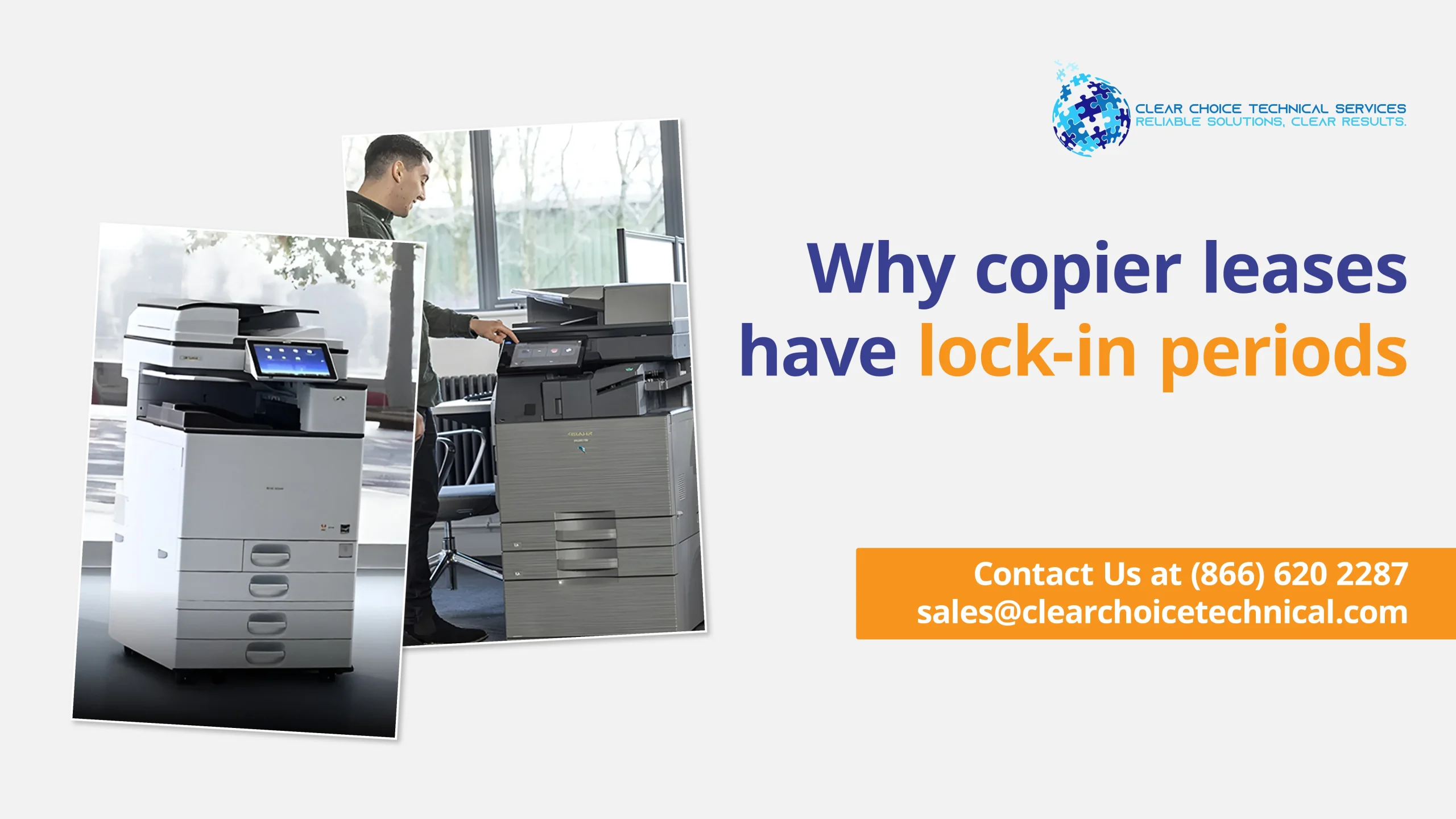
A copier lease lock-in period is the contractual timeframe during which a customer agrees to continue making lease payments under the signed agreement. It protects the leasing company while giving businesses access to professional office equipment without making a large upfront purchase. Although many business owners initially view these terms as restrictive, they exist because leasing providers assume significant financial risk when placing equipment.
Copier Lease vs. Lock-In Period
| Lease Term | Lock-In Period |
| Total length of the lease agreement | Portion of the contract restricting early cancellation |
| Defines payment schedule | Defines cancellation obligations |
| Usually 36–60 months | Often mirrors the lease duration |
| Ends when the lease expires | May include additional renewal conditions |
The copier lease minimum term also allows businesses to benefit from lower monthly costs compared with financing an outright purchase. While some organizations may feel locked into copier lease agreements, understanding the financial reasoning behind the contract creates a clearer picture of how leasing works. Businesses that expect rapid growth or changing print needs should discuss flexible upgrade provisions before signing to reduce future limitations.
What Are the Financial Penalties for Ending a Copier Lease Early?
One of the biggest misconceptions about copier leasing is that businesses can simply stop making payments if they no longer need the equipment. In reality, many contracts require customers to satisfy the remaining financial obligation or pay an agreed-upon termination fee before the lease officially ends. These provisions protect the leasing company because the original pricing assumed the equipment would remain under contract for the full copier lease commitment period.
The actual cost varies based on several factors, including the remaining balance, equipment value, lease type, and provider policies. Some agreements require payment of all remaining monthly installments, while others calculate a discounted payoff amount or apply administrative fees. Because every contract differs, businesses should understand the total financial commitment before assuming cancellation will save money.
Costs That May Apply When Ending a Lease Early
- Remaining monthly lease payments
- Early termination charges
- Administrative processing fees
- Equipment pickup or transportation costs
- Excess usage charges
- Outstanding maintenance invoices
- Equipment damage fees
- Taxes or other contractual obligations
Companies evaluating their options should compare the cost of continuing the lease with the expense of buying out the equipment or negotiating a new agreement. In many cases, purchasing the copier may be less expensive than paying multiple penalties while returning the machine. This is another reason why copier leases are long term, as spreading equipment costs across several years keeps monthly payments lower while protecting both parties from sudden contract cancellations.
How to Reduce the Financial Impact of a Copier Lease Commitment Period
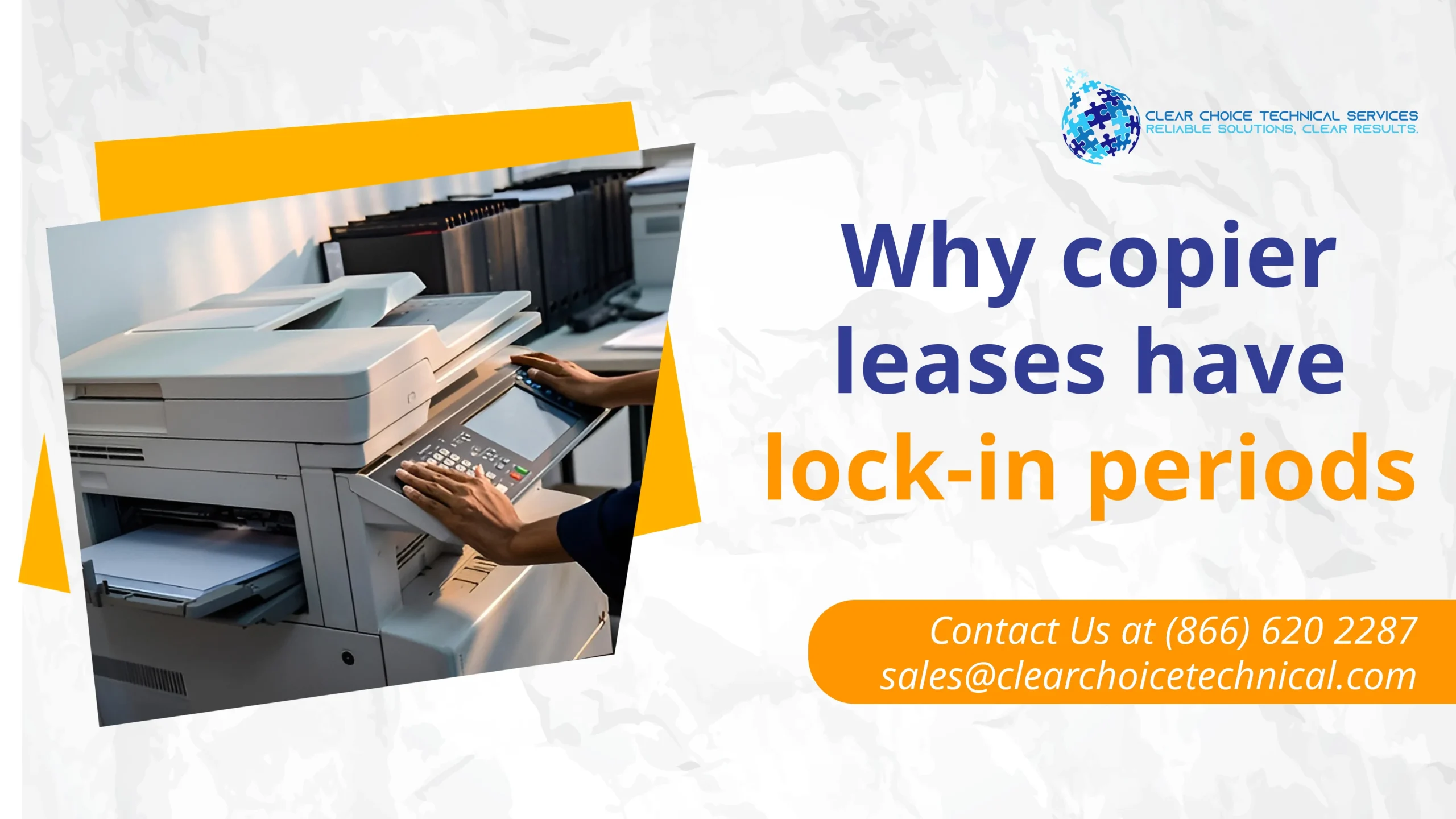
The easiest way to reduce leasing costs is to negotiate favorable terms before signing the contract. Businesses should discuss upgrade rights, buyout formulas, renewal procedures, and termination provisions while the agreement is still being prepared. These conversations often provide more flexibility than attempting to renegotiate after the lease becomes active.
Regularly reviewing copier usage also helps prevent unnecessary expenses throughout the lease. Companies that consistently exceed their monthly print allowance may benefit from adjusting their service plan instead of paying recurring overage fees. Likewise, organizations considering a copier lease 12 month option or other flexible alternatives should compare the total cost of ownership rather than focusing solely on the monthly payment.
Understand the Contract Before Signing
Choosing the right copier lease involves much more than comparing monthly payments. Understanding the copier lease lock-in period allows businesses to evaluate their contractual obligations, compare flexible alternatives, and negotiate terms that better support long-term operational goals. By reviewing every clause carefully, asking the right questions, and planning for future growth, organizations can reduce financial risk while selecting equipment that meets their current and future needs.
Flexible Copier Leasing Solutions in Charlotte
Clear Choice Technical Services makes copier leasing in Charlotte simple, transparent, and budget-friendly. Every lease is explained in straightforward language with fair pricing, flexible options, and no unnecessary surprises, allowing businesses to choose a solution that fits both their current operations and future growth plans.
Whether a company is exploring a traditional lease, looking for a shorter commitment, or comparing alternatives to reduce long-term risk, the Clear Choice Technical Services team is ready to help. Contact the team today through the Contact Page or call (704) 266-3866 to discuss copier leasing options, review contract terms, and find the right solution for your business with confidence.


